The pattern is the diagnosis
All three complaints come from the same place: something has changed how water moves through the head. Water is the same, the supply pressure is the same, so the difference is where the flow is being interrupted. A whistle means the water is being forced through a narrower path than it was designed for. A sideways fan means the exit is no longer even across its width. A sputter means the flow is being broken into slugs on the way out.
That's the useful part. The spray pattern tells you where to look before you've taken anything apart — and in most cases the answer is not "buy a new head."
Whistling
A whistle is the sound of a restriction. When the channel the water travels through gets narrower than it was designed for, the water speeds up through that point and the turbulence turns into an audible tone. It has nothing to do with being loud on purpose; it is the head reporting that its internal path has closed in.
On a pre-rinse head, the first place to look for that restriction is the inlet screen or filter, and the second is the internal channel behind it. Mineral scale and debris both pack into the narrowest point first. The head that is starting to whistle is worth cleaning before it is worth replacing — a scaled head often sprays almost normally right up until it doesn't, and the whistle is the warning that arrives first.
If the head has been whistling and the flow has also dropped, the same answer covers both: the fix for weakening spray is the same one that quiets a whistle, and it costs twenty minutes with vinegar rather than a new part. The full sequence is on the descale page.
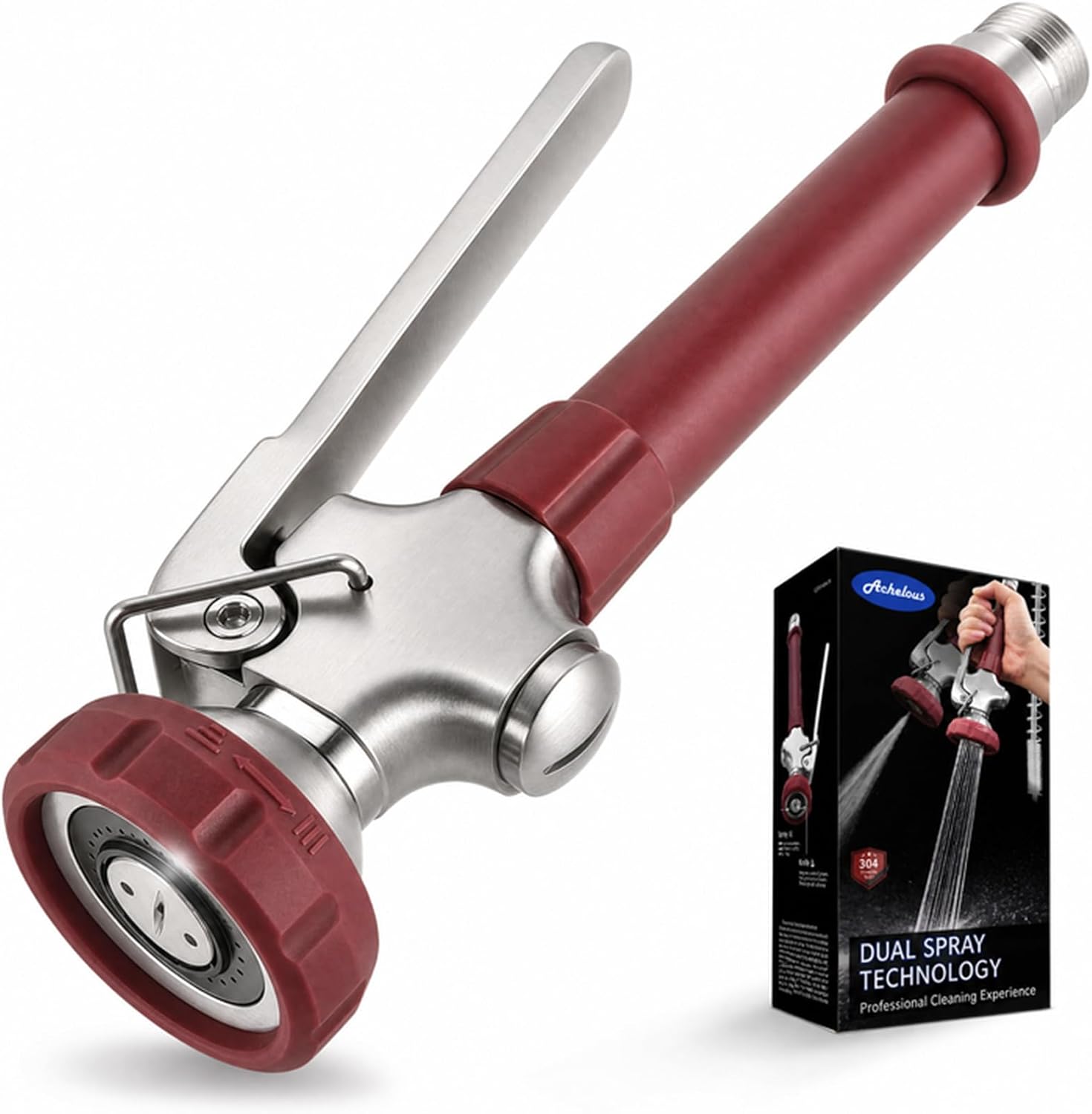
Spraying sideways
A head that fans off to one side is telling you the exit is no longer uniform. Water always takes the easiest path, so if one part of the opening is clearer than the rest, the stream leans that way. Two things cause it: partial restriction across part of the opening, or a damaged and distorted edge at the exit.
Restriction is the common one and it is cleanable. The narrow slot or the ring of holes at the tip is where scale builds up first, because that is where the water is thinnest and drying happens fastest between shifts. Clearing the whole width of the opening, not just the visible crust, is what restores the balance between the two sides of the fan.
The second cause is physical: a knocked tip, a bent lip, a dent from one hard landing on the sink edge. That one does not clean back into shape. Whether it can be replaced on its own or means a new head depends on what your head is built from, and that is the exact question the repair-or-replace page walks through.
Sputtering instead of streaming
A sputter is air, or air and water alternating. If the stream breaks into pulses, the head is not building a clean column of water, and that almost always points upstream of the head rather than to the head itself — a partially closed supply stop, a kinked hose, or a line that has been disturbed and still has air in it.
The test is cheap: with the head off, run the supply into a bucket for a few seconds and watch the stream. Clean and steady means the head is the problem. Pulsing or spitting means the head was never the problem and the line or the supply is — and no new part will change that.
What to actually do, in order
- Describe the pattern to yourself first. Whistle, sideways, or sputter. Name it before you touch anything, because the fix differs for each and the wrong fix costs the most.
- For a whistle or a sideways fan, clean before you buy. Remove the head, clear the screen and the full width of the opening, soak the assembly, and clear the internal channel. Both of these faults frequently resolve here.
- Check the seam you can't clean. If the head is dripping where it joins the hose at the same time, that's a separate fault with its own answer — the four leak points covers it, and one of them is the washer that is disturbed every time the head comes off.
- Run the supply without the head if the spray sputters. Decide whether the fault is in the head or upstream of it before spending anything.
- Only then decide head versus whole unit. And if the head does need replacing, confirm the thread before ordering — a ruler settles it in five minutes.
What we won't claim
- We can't tell you from here which of the three you have. The diagnosis is the pattern you're seeing right now, and we're not in the room. What we can do is tell you what each one usually means and in what order to check — which is what this page is.
- We won't put numbers on how often each fault happens. We don't have the maintenance records to support a frequency claim, so we're not going to write one. The order above is a checking order, not a ranked list of commonness.
- A pattern fault is not automatically a wear-out. Treating an even fan as a wear item wastes money on parts the head didn't need. Most of the faults described here are maintenance, not replacement.
- A change in pattern is not the same as a change in flow rate. If your question is whether the head is delivering its rated flow, that is measured, not eyeballed — the GPM page covers how the rating works and what the federal limits are.
The short version
Whistle means a restriction — clean the screen and the channel before buying anything. Sideways fan means the exit is uneven — clean the full width, and replace only if the tip is physically damaged. Sputter is usually upstream of the head — run the supply without the head to find out which. Name the pattern first; it tells you which part is even worth looking at.
Still not sure which fault you're looking at? Describe it in three lines — we answer with the part to check, not a sales pitch.