Diameter lies. Pitch doesn't.
The fit guide's table lists three connections within about a millimetre of each other: roughly 22.2 mm, 21.2 mm and 21.0 mm outside diameter. Anything you measure between about 20.8 and 22.4 mm sits in the ambiguous zone — which is exactly why "it measured about 22 mm" has never settled an argument. Diameter alone will not separate these threads.
Threads per inch will. Twenty threads per inch versus fourteen is a difference of six full peaks on every inch of thread — visible at arm's length, no instrument required. That is the number the whole decision hangs on, and it is the easiest one to take without a caliper.
Count the peaks on one inch of thread
- Close the supply stop under the sink — four seconds, saves a soaked floor — then unscrew the old spray head from the hose by hand. If it's seized, use a strap wrench. Never pliers on chrome.
- Hold the ruler along the threads, parallel to the hose, with the edge sitting on the peaks. You are measuring length along the hose, not across it.
- Count the peaks across exactly one inch (25.4 mm). If one inch of thread is awkward to read, count across a quarter inch and multiply by four — usually easier and accurate enough for this decision.
- Compare your count. Five peaks per quarter inch → about 20 TPI → the standard commercial pre-rinse hose end. Three to four peaks → about 14 TPI → a pipe thread, not your part.
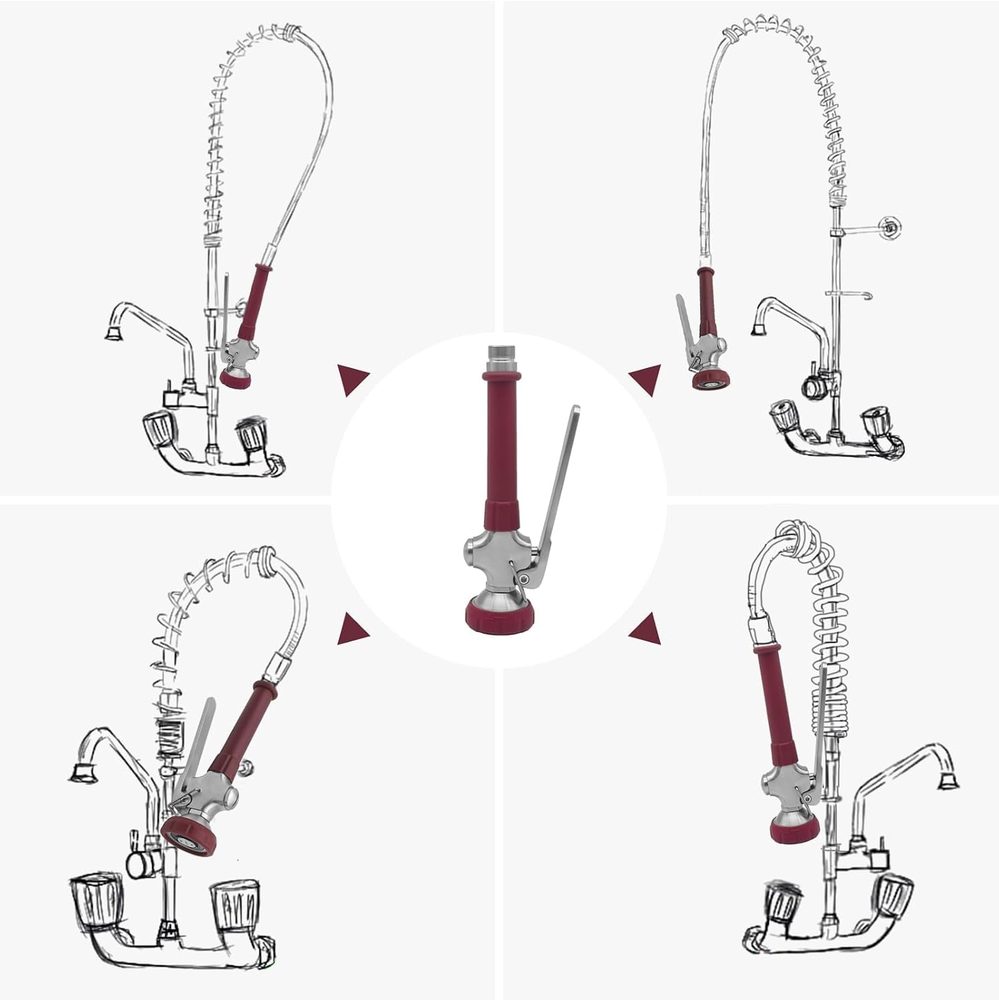
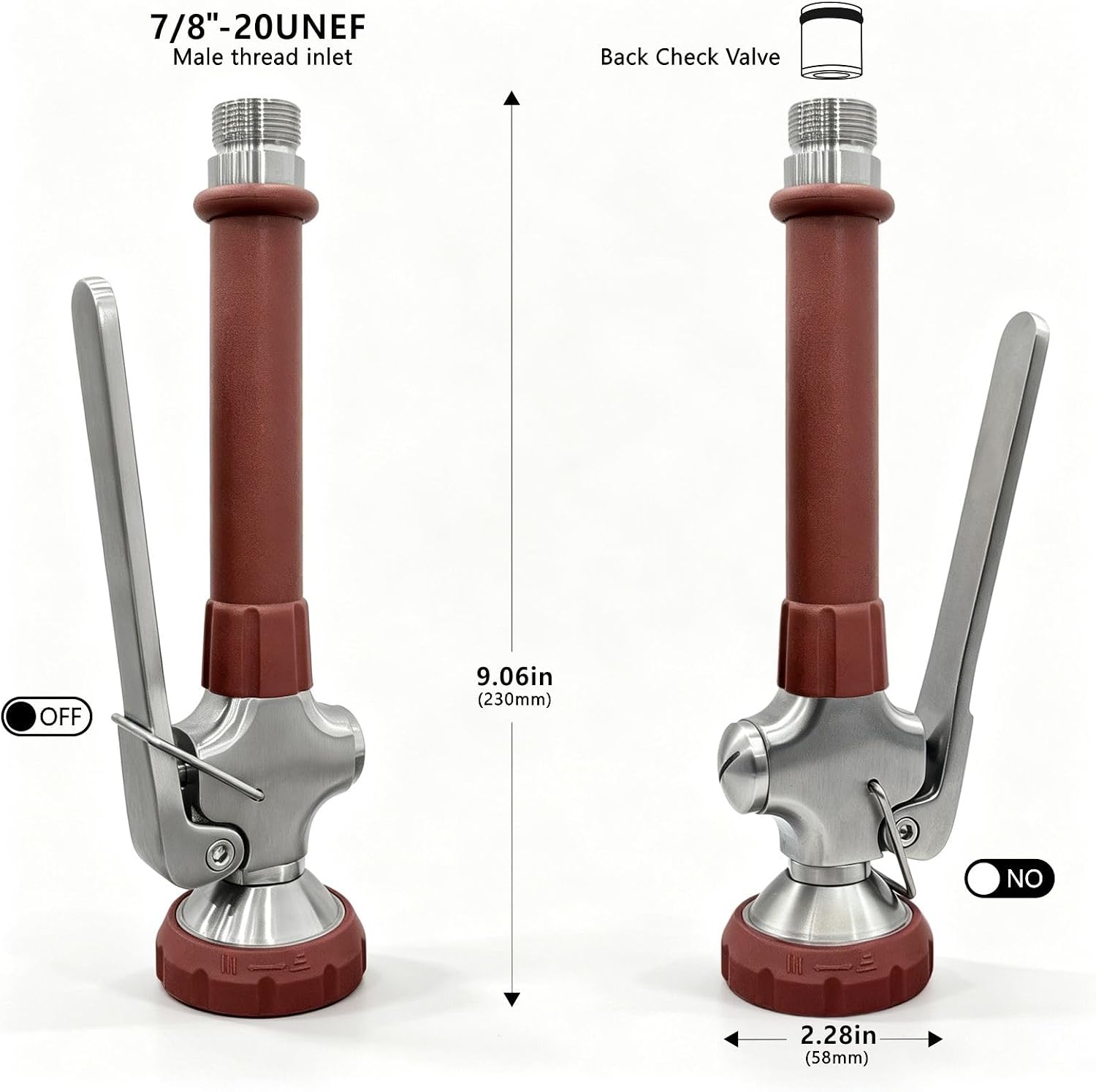
What your count means
About 20 TPI, parallel threads → you're clear. That's the standard commercial pre-rinse hose end, 7/8”-20 UNEF. A direct-fit head of this type threads on by hand and gets snugged a quarter turn with a wrench. No adapter, no plumber. If you want a second opinion on the measurement before you order, the thread checker turns one measurement into a verdict in about a minute.
About 14 TPI, or the thread visibly narrows toward the tip → stop. You have a household (NPT) or European (BSPP) fixture. Ordering a commercial head will cost you the part, the shipping both ways and about two weeks — and there is no adapter that solves it. This article explains why, and what to buy for home use instead.
The photo that gets a straight answer
A clear photo settles this as well as a measurement, and takes less skill. To be readable, a thread photo needs four things:
- Straight-on and in focus — the thread peaks must be individually visible, not a shiny blur.
- Something for scale beside the threads — a ruler is best, a coin works. For scale: a US quarter coin is slightly wider than a 7/8” thread.
- The whole hose end in frame, so the shape of the thread can be judged, not just its width.
- Real light. Chrome eats flash reflections; shoot near a window or under the pass lighting, not into the sink shadow.
Send it through ask a fit question and you'll get a yes or no with the reasoning, not a shrug. The same standard applies to us that we apply to everyone else in the guide: if the answer comes back as “probably fits” or “should work”, treat it as a no.
What we won't claim
- A ruler is coarser than a caliper, and we won't pretend otherwise. If your count lands between the two answers — say you counted four and a half peaks — don't order on it. Take the photo route instead; it costs nothing and a wrong head costs about two weeks.
- Width measured with a ruler alone should never be the reason you order. The ambiguous zone is real precisely because a ruler reading of "about 22 mm" can't separate a match from a near-miss. Count the pitch, or send the photo.
- The caliper method is still the gold standard. This article is the fallback for tonight, not a replacement — the full table, including the one exception within our own lineup that offers an alternative end thread, lives on the thread & fit guide.
- Commercial part, standard thread. Our heads fit the 7/8”-20 UNEF hose end used on US pre-rinse assemblies; the lifetime warranty card covers the head, with [email protected] printed on it.
The short version
Count peaks, not width: five peaks per quarter inch means go, three or four means stop. Between the two, or can't get a clean count? A photo with a ruler beside the thread gets a straight answer, and it's the only cost-free option on the table. Everything else — the wrong head, the return shipping, the two weeks — has a price tag on it.
Counted something you didn't expect? Send the photo in three lines — we answer with measurements, not sales talk.