Scale is the water leaving its minerals behind
Commercial pre-rinse lines run hot, and hot water holds less of the dissolved calcium and magnesium that cold water carries. Every pass through the spray face deposits a whisper-thin layer of minerals on the surfaces it touches — and the face is the worst possible place for that, because its hundreds of tiny holes meter the water into the pattern. The holes are small to begin with. They don't need much mineral before the pattern starts telling on them.
That's the useful part: the pattern is a gauge. You don't need to disassemble anything or test anything to know what stage you're in. Look at what comes out of the nozzle.
The edges go ragged
Early scale doesn't slow the spray down — it blurs it. The center of the pattern still hits hard, but the edges of the fan or the ring look fuzzy instead of sharp, and the water lands a little more randomly than it used to. Most cooks never mention this stage, because the head still works. The face has a thin mineral film starting on it, not enough to block holes yet.
This is the cheap stage. A five-minute warm-vinegar bath during close-down wipes the film off before it becomes a problem, and the head comes back indistinguishable from new. No scrubbing, no disassembling beyond pulling the head.
The jet narrows
Now the holes are partly blocked. The pattern is visibly tighter and the stream is visibly weaker; pans that took one pass take two, and the crew starts angling plates to chase the strong part of the pattern. This is the stage kitchens tend to notice, usually because the dish machine queue starts backing up.
Still fixable, and the fix is the standard soak: twenty minutes in warm vinegar, a soft brush across the face, rinse, and run it. If it's still not sharp, do a second round twenty minutes later — two rounds handle the large majority of cases. What you should expect back is the full, sharp pattern you had when the head was new. What you shouldn't expect is for it to stay that way forever: how fast it re-scales depends on your water, and the honest telltale is your own building — how often the ice machine's filter needs changing tells you roughly how hard your water is.
The pattern comes back lopsided — even after a proper soak
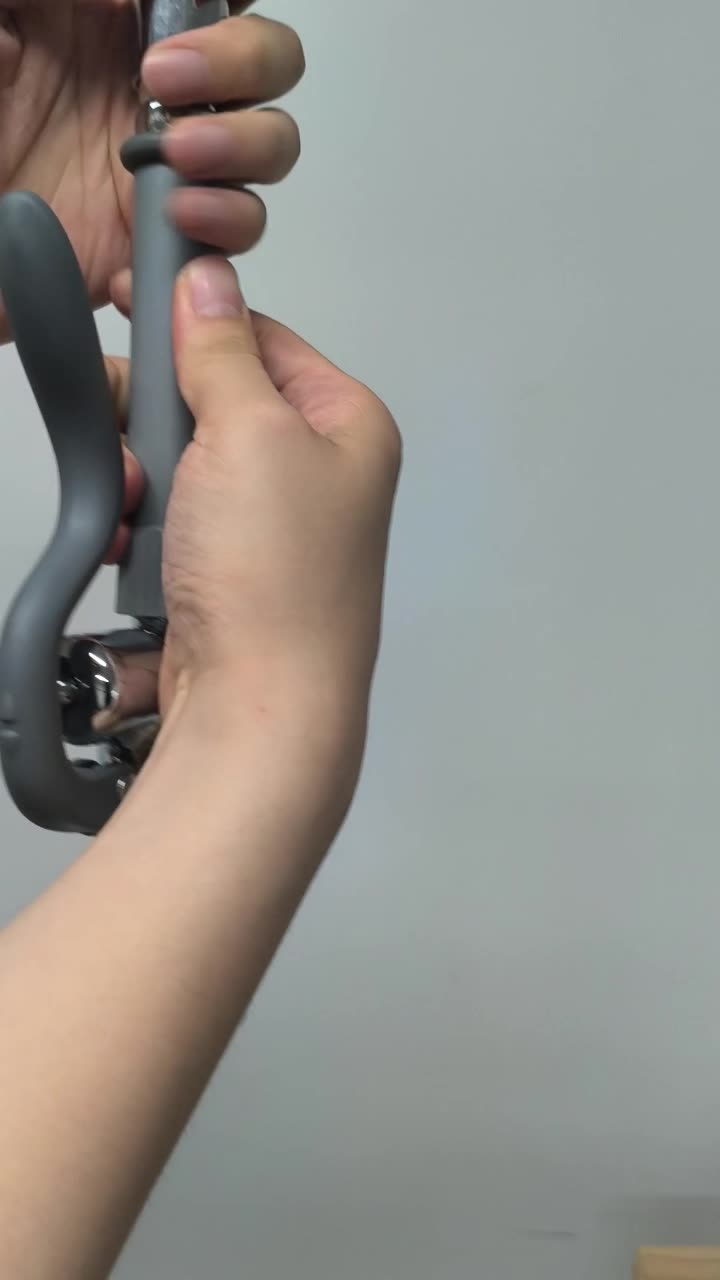
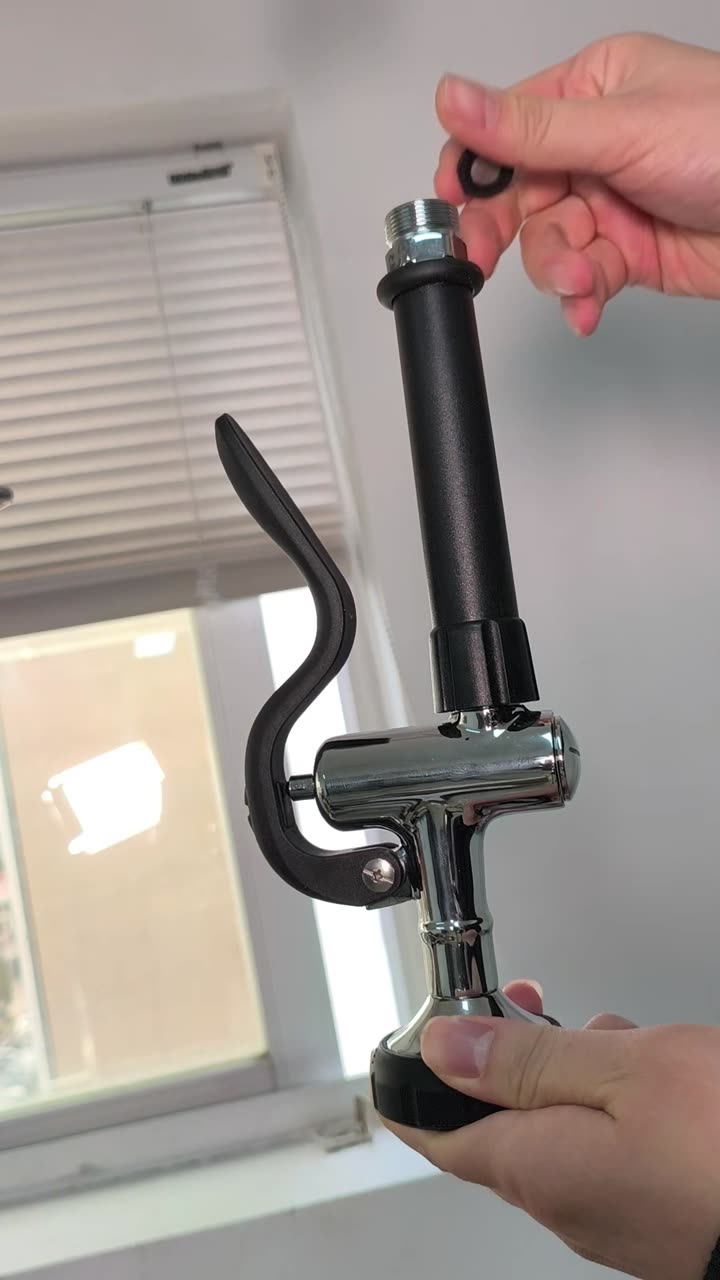
This is the stage where soaking stops working, and it's important to know why. Left long enough, scale doesn't just sit on the face — in a bad case the mineral and the metal interact, holes end up etched and deformed, and no amount of vinegar puts the geometry back. The telltale is specific: you do a proper twenty-minute soak, twice, and the pattern is still uneven — strong on one side, dead on the other, or spraying at an angle. At that point the face has permanent damage and the honest fix is a new head.
Two footnotes to stage three, because both matter:
- If a brand-new head goes weak again in a few weeks, the head wasn't the problem. That's the maintenance, not the hardware — the new head is scaling at exactly the same speed the old one did. The schedule that prevents it (monthly, twice a month in hard-water areas) is in our descale guide.
- Before you order the replacement, rule out the non-scale causes — the filter washer inside the hose nut, a partially closed valve, a kinked hose. We keep a full symptom-to-part map in the head-or-unit guide, because the most expensive version of this job is replacing the wrong part.
The one glance that prevents all of this
You don't need a maintenance program for a spray head. You need one habit: once a week, fire the spray across the sink and look at the edges of the pattern. Sharp edges, carry on. Fuzzy edges, give it a five-minute bath that night — at stage one, that's the whole job, and you will never reach the stage where heads get thrown away.
The full walkthrough — the soak steps with photos, what to do when the soak isn't enough, and the prevention schedule — lives in our descale guide. This article is the why; that page is the how.
What we won't claim
- We sell heads, and we'd still rather you soak. A weak-spray head is usually not a dead one — it is twenty minutes away from working. Buy a head when the pattern stays lopsided after two proper soaks, not before.
- Vinegar won't fix everything that looks like scale. A dripping handle, a leak at the joint, a hose that's cracked — different parts, different fixes. The symptom-to-part map in the previous article covers those.
- We don't quote a descaling interval as gospel. Water hardness varies block by block. Your ice machine filter, your kettle, your dishwasher's spray arms — any of them will tell you more about your building's water than a chart on the internet will.
The short version
Scale takes a spray head in three stages: ragged edges, a narrowing jet, then a lopsided pattern that soaking can't fix. The first two stages cost you a cup of warm vinegar and twenty minutes; the third costs a head. Watch the edges of the pattern once a week, soak when they fuzz, and you'll only ever meet stage three on purpose.
Ordering a replacement? Check your thread first — it's faster than a return.